Scientific overview
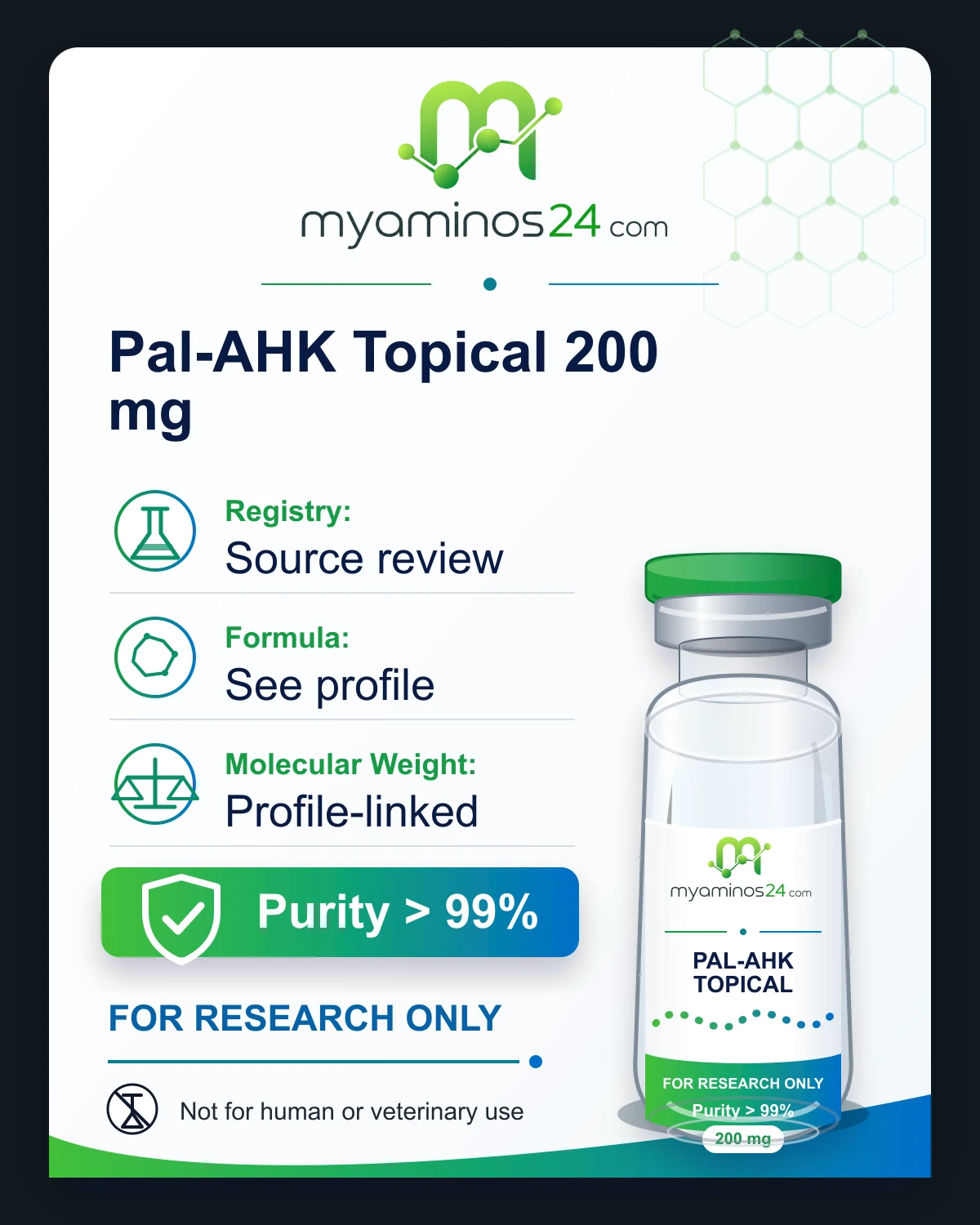
Pal-AHK Topical 200 mg is presented as an information profile, not as a product recommendation. The page separates nomenclature, research context, possible mechanisms and evidence limitations so readers can review the topic without dosage guidance, medical claims or consumer-style persuasion.
Research relevance
The research context is mapped through synonyms, component names, model systems and public scientific databases. Findings from cell, animal or early clinical literature are treated as context, not as proof of general clinical utility.
Mechanistic context
Mechanistic notes describe research hypotheses only. Receptor activity, biomarker changes or model observations are not presented as evidence of safety, efficacy or suitability for use.
Pal-AHK Topical 200 mg in practice
Pal-AHK Topical 200 mg is typically discussed in practice around skin matrix and barrier models. Many readers want to understand why the profile appears in research communities, which terms need to be separated clearly and how strong the current evidence really is.
Typical interest areas
- skin matrix and barrier models
- pigmentation biology
- cosmetic versus research-only claims
- stability, formulation and analytical quality
What readers often want to know
What is Pal-AHK Topical 200 mg usually asked about?
Most questions are about skin matrix and barrier models, synonyms, model findings and the boundary between research interest and use-related claims.
Is the evidence clear?
The evidence should be read as clinically limited or context-dependent. Individual sources may be useful, but they do not replace medical or regulatory assessment.
Does this page provide dosage or use guidance?
No. myaminos24.com does not provide dosage instructions, intake recommendations or recommendations for human or veterinary use.
Evidence status
Clinically limited or context-dependent
Context note
This page summarizes publicly available information, database entries and research contexts. It is not medical advice, not a product recommendation and not a recommendation for use.
Sources
- PubMed search for Pal-AHK
PubMed, laufend · pubmed
- PubChem search for Pal-AHK
PubChem, laufend · database